
There’s a new surprise in the quiet lanes of central Delhi this week: the newly opened Ethiopian Cultural Centre, a space that feels like getting a passport to East Africa without leaving the capital. Located in Chanakyapuri, it is equal parts café, museum, and a community space, and transports you to the plains of East Africa as it were.
The cultural centre is the brainchild of H.E. Fesseha Shawel Gebre, Ambassador of Ethiopia to India and the two deputy heads of mission of the embassy, H.E. Molalign Asfaw and H.E. Bizunesh Meseret. “This centre is a mini Ethiopia in the heart of Lutyens’ Delhi, and the only one of its kind among all 54 African nations here,” says the Ambassador.
The space, designed by Devashish Kishore (who is also the managing director), reflects Ethiopian lifestyle and aesthetics. Bamboo and wood dominate the interiors, with deep earth tones and vernacular motifs on the walls that draw inspiration from Lalibela — the famous rock-cut churches in northern Ethiopia and a UNESCO World Heritage Site. The interiors are also adorned with yellow meskel flowers, symbols of fertility, rebirth, and hope.
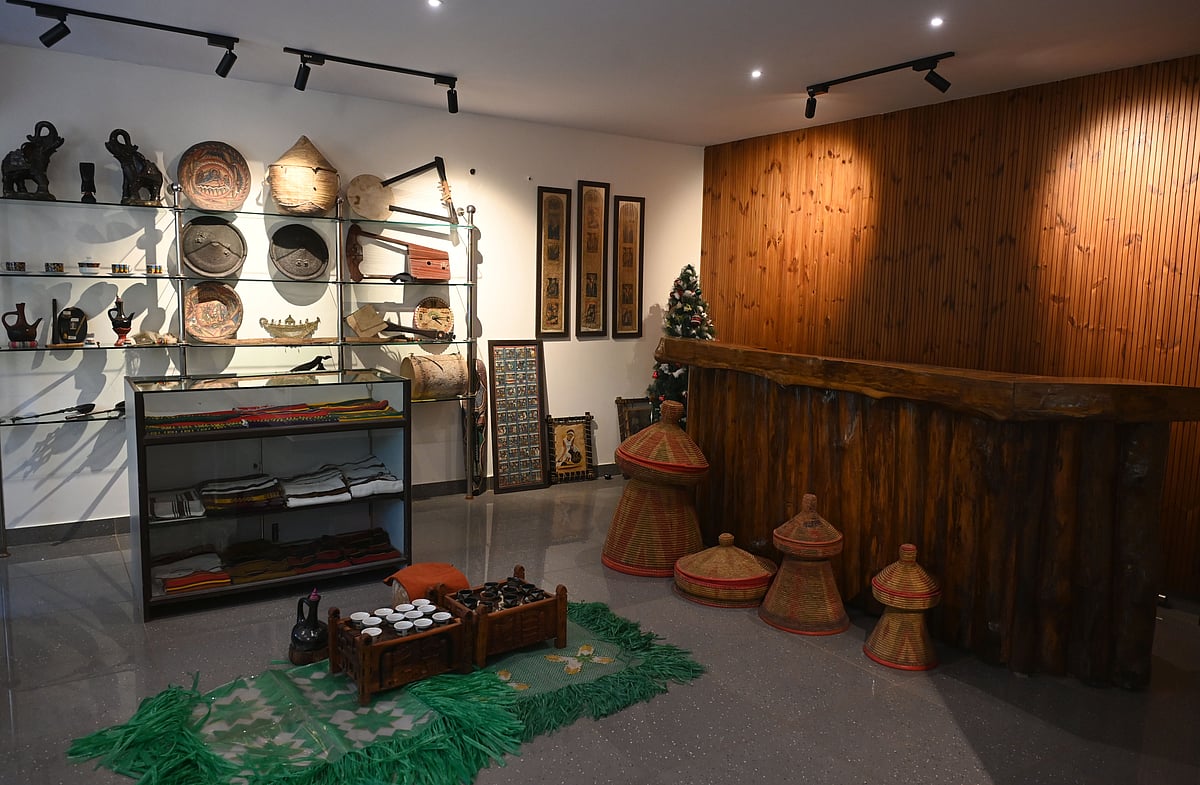
“Even the small details, like the lighting, the brick coves, the flooring — everything is inspired by the way Ethiopian homes and huts are made,” Kishore says, pointing to a stretch of leather wall art created by local Ethiopian artisans in one of the dining spaces. These paintings portray cultural stories of the country, featuring artworks, dance, and stories of their people, tacked raw against brick and wood.
The centre also offers a museum section that explores the cultural heritage of the country, with baskets, tribal hats reminiscent of India’s northeast, string instruments, percussion drums, and historical photographs. Many of the objects look familiar and foreign at the same time — a reminder of how African and Indian craft traditions sometimes mirror each other without ever meeting.
The offerings
The café is a spacious open dining area under the green canopy that invites a slow winter lunch. The centre is open to members, and applications are open to the public who want to spend time here regularly. Ethiopia is famous for its coffee, and the centre celebrates that tradition with a special coffee ceremony. Fresh Arabica beans are roasted, ground, and brewed in a traditional clay pot called a jebena. It’s their way of welcoming guests and sharing a sense of community.
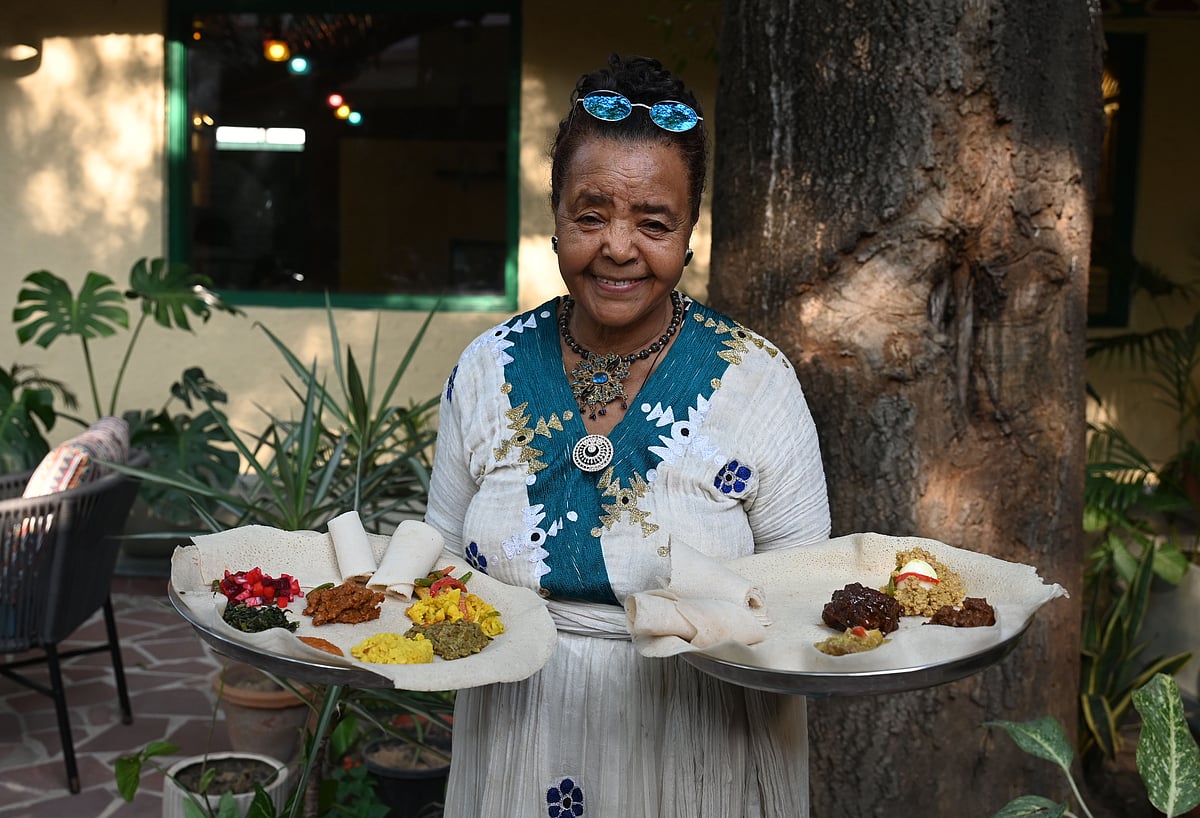
Led by Ethiopian chef Mulunesh Ayele, the menu offers coffee ceremonies and homestyle dishes. The star is Beyaynetu, a classic platter based around injera — a soft, tangy, fermented flatbread used to scoop up a galaxy of stews served on a single plate.
At the heart of Ethiopian cooking is berbere, the deep-red spice mix that defines many dishes here. It blends chili, coriander, garlic, ginger, Ethiopian holy basil (besobela), korarima or Ethiopian cardamom, ajwain, nigella (black cumin), and fenugreek — a sun-dried, aromatic hit that gives Ethiopian food its warmth and tang.
Dishes range from bold, berbere-based preparations like Doro Wat, Ethiopia’s famous chicken stew, to gentler stews cooked with turmeric and ginger. Meat lovers can choose from slow-cooked chicken and lamb dishes full of warmth and richness: Beg Wot, a tender lamb stew; Minchet Abish, made with ground lamb; or Beg Tibs, sautéed lamb with onions, garlic, peppers, and spices.
Vegetarians will enjoy the full spread of Beyaynetu, which features Defen Mesir, a whole-lentil stew; Missir Kik, red lentils cooked slowly with onions; and Azifa, a fresh green-lentil salad with lime, mustard, onions, and green chillies. Lentils, spinach, carrots, and potatoes appear in many dishes, offering comforting flavours that feel surprisingly familiar to Indian tastes, with their slow cooking and layering of spices.
As winter arrives, the courtyard will likely attract those seeking sunlight. Slowly, Delhi will begin discovering Ethiopia—not as a distant country, but as the aroma of coffee or a flower painted on a wall.
Membership to the centre is open to the public at a processing fee of ₹8,260 (inclusive of GST) per year. Visit ethiopianculturalcentre.com/membership for more details.
from Food https://ift.tt/FZD4x0h


0 Comments